From Mashiko to Plagwitz
I learned to throw in a Japanese pottery town, and came home to Leipzig with a suitcase of glaze notes and a very specific idea of what a rice bowl should weigh.
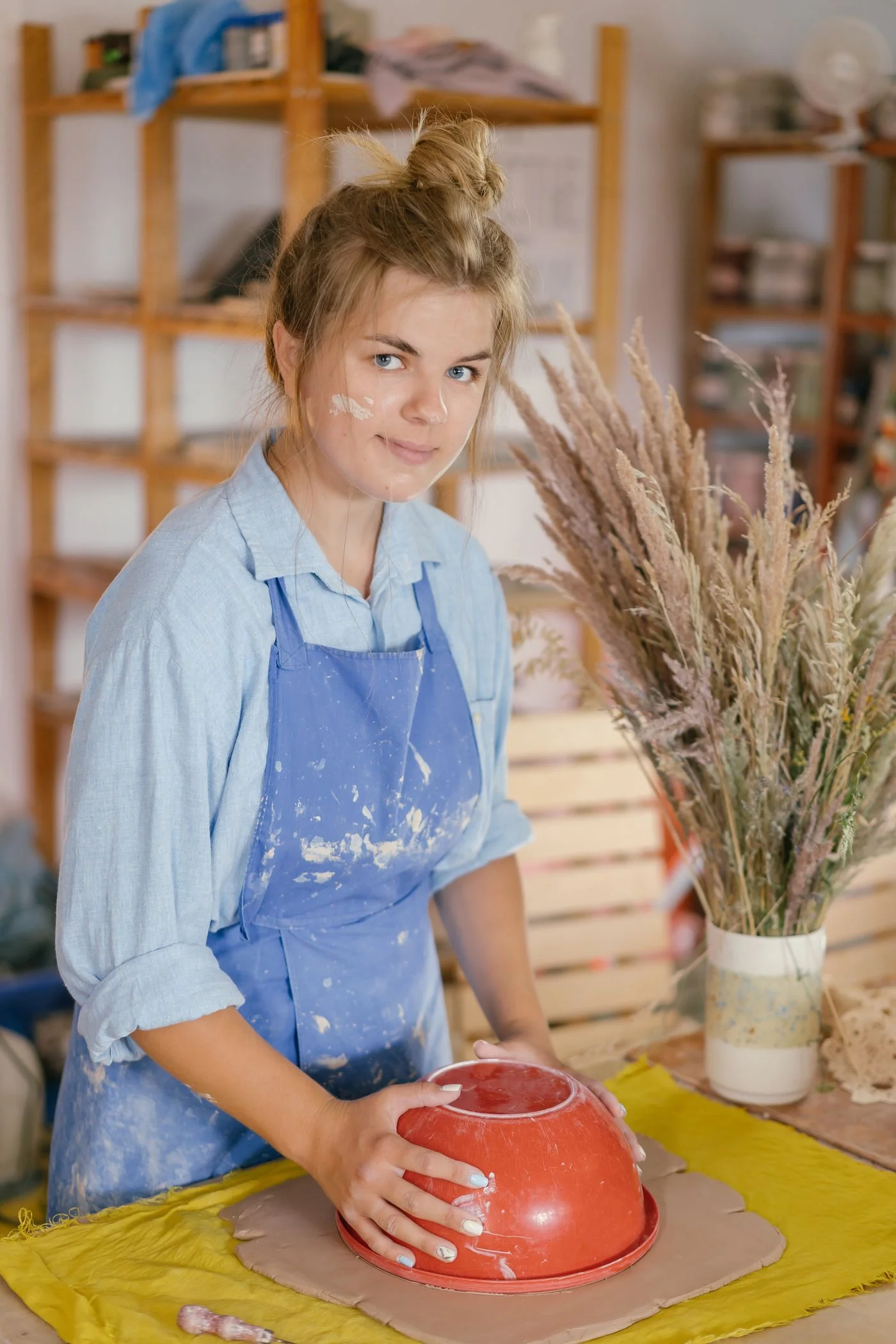
Hello, I’m Hanna.
I grew up in Leipzig and studied graphic design, which is why I still sketch every new bowl before I throw it. A summer course turned into two years in Mashiko, north of Tokyo, where I swept floors, wedged clay and finally sat at the wheel of a potter who made the same teacup a thousand times until it was simply right.
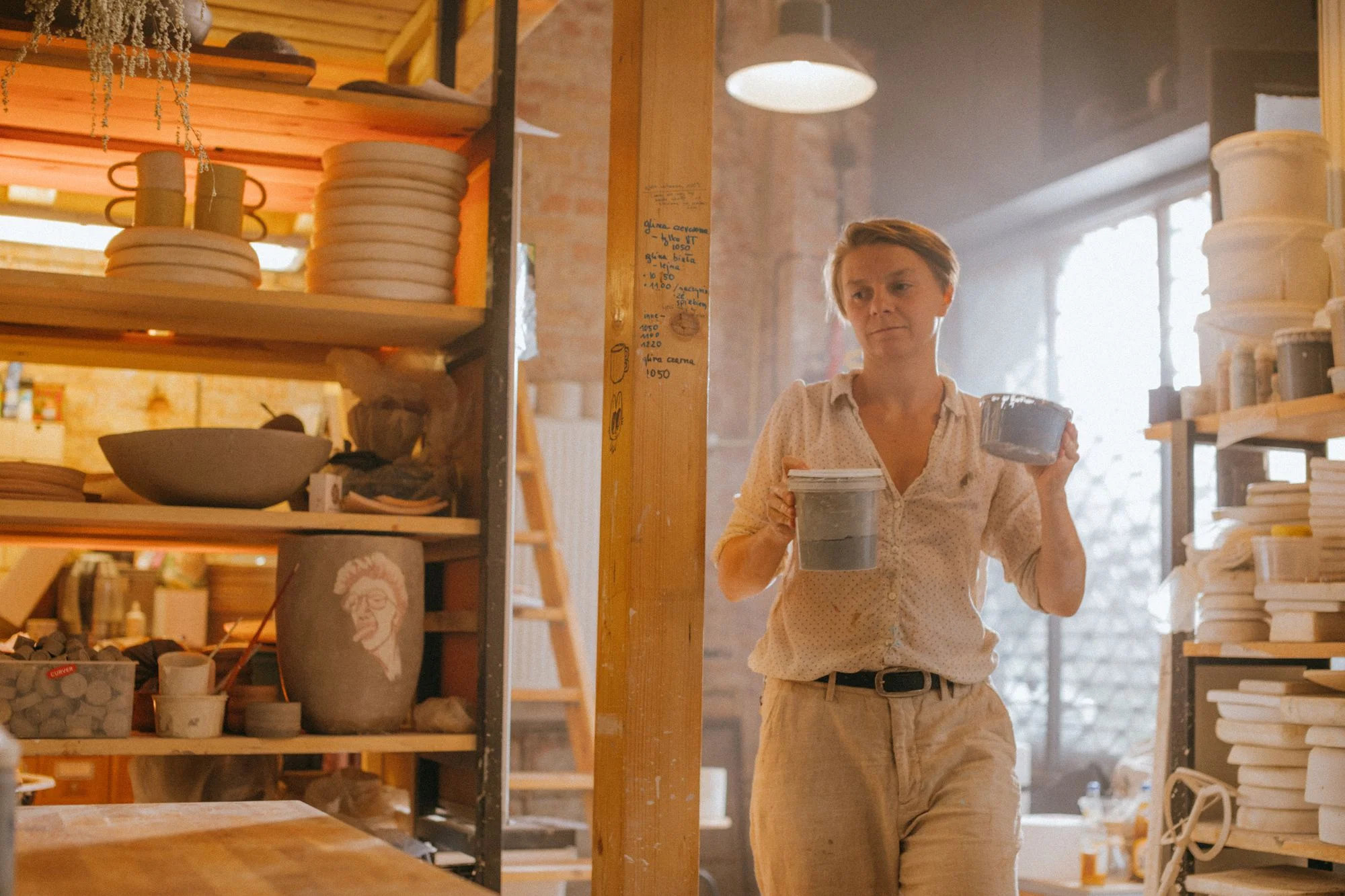
Since 2019 I have worked in a corner of the Spinnerei, the old cotton mill in Plagwitz: one kiln, three shelves of drying pots, six wheels for my students and a window that looks over the canal.
A slow apprenticeship
An evening class in Connewitz
A friend gives me a ten-week pottery course for my birthday. I make eleven lopsided bowls and keep going.
Two years in Mashiko
Apprentice in a family pottery north of Tokyo: wedging, trimming, packing the wood kiln — and learning patience.
Ceramics school in the Westerwald
Glaze chemistry and kiln technology at the ceramics school in Höhr-Grenzhausen, the heart of German stoneware.
A studio in the Spinnerei
Hall 14, one electric kiln and a second-hand wheel from a potter who was retiring in Halle.
The first restaurant order
Two hundred plates for a tasting menu. Restaurants now make up half of the work that leaves the studio.
Six wheels, open to everyone
Evening classes twice a week and a Saturday workshop for people who have never touched clay.
How a bowl is made
Five steps and about three weeks between a lump of clay and a bowl you can eat from.
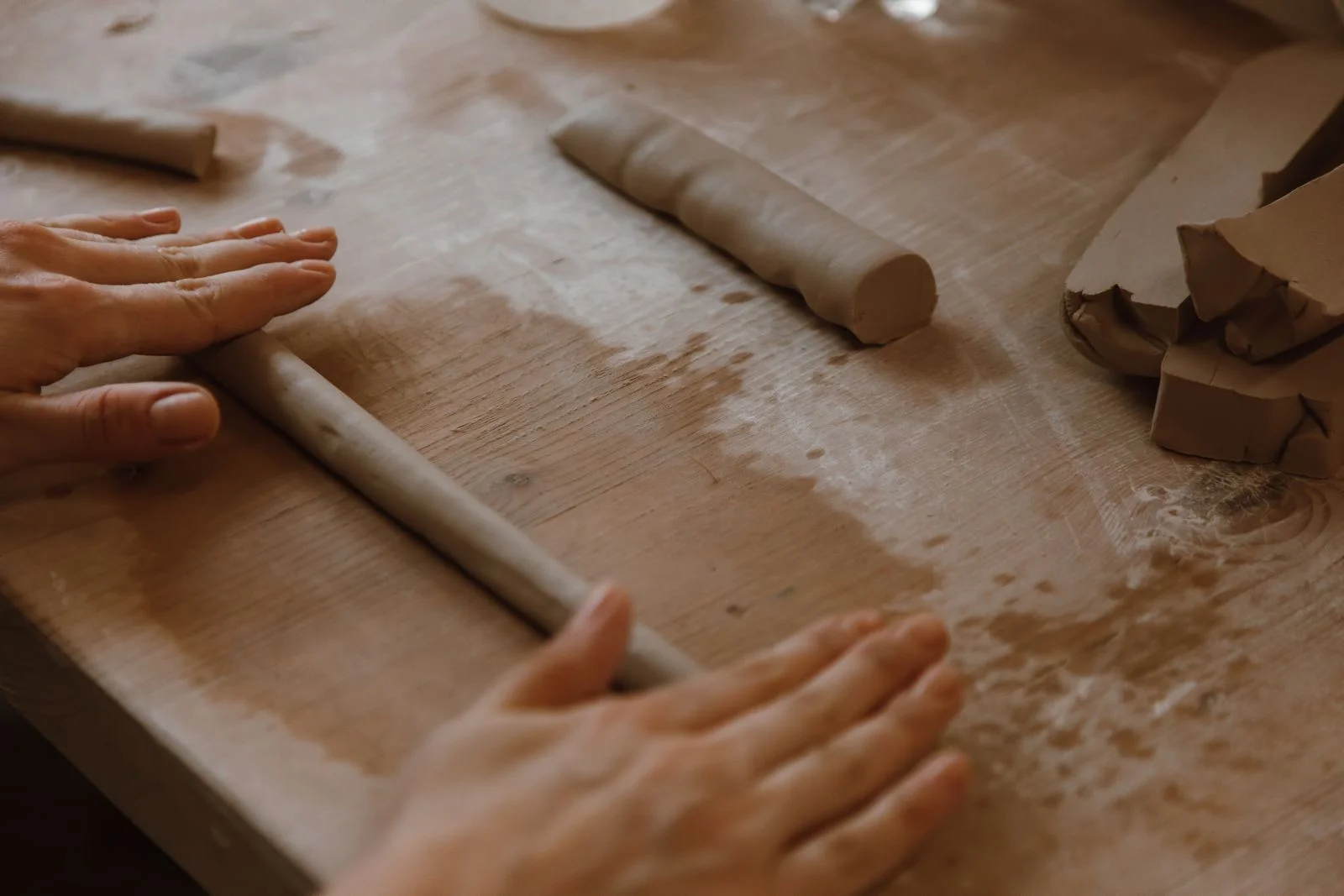
Day 1
Wedging
The clay is kneaded like bread dough to push out the air: one bubble left inside can crack a bowl in the kiln.
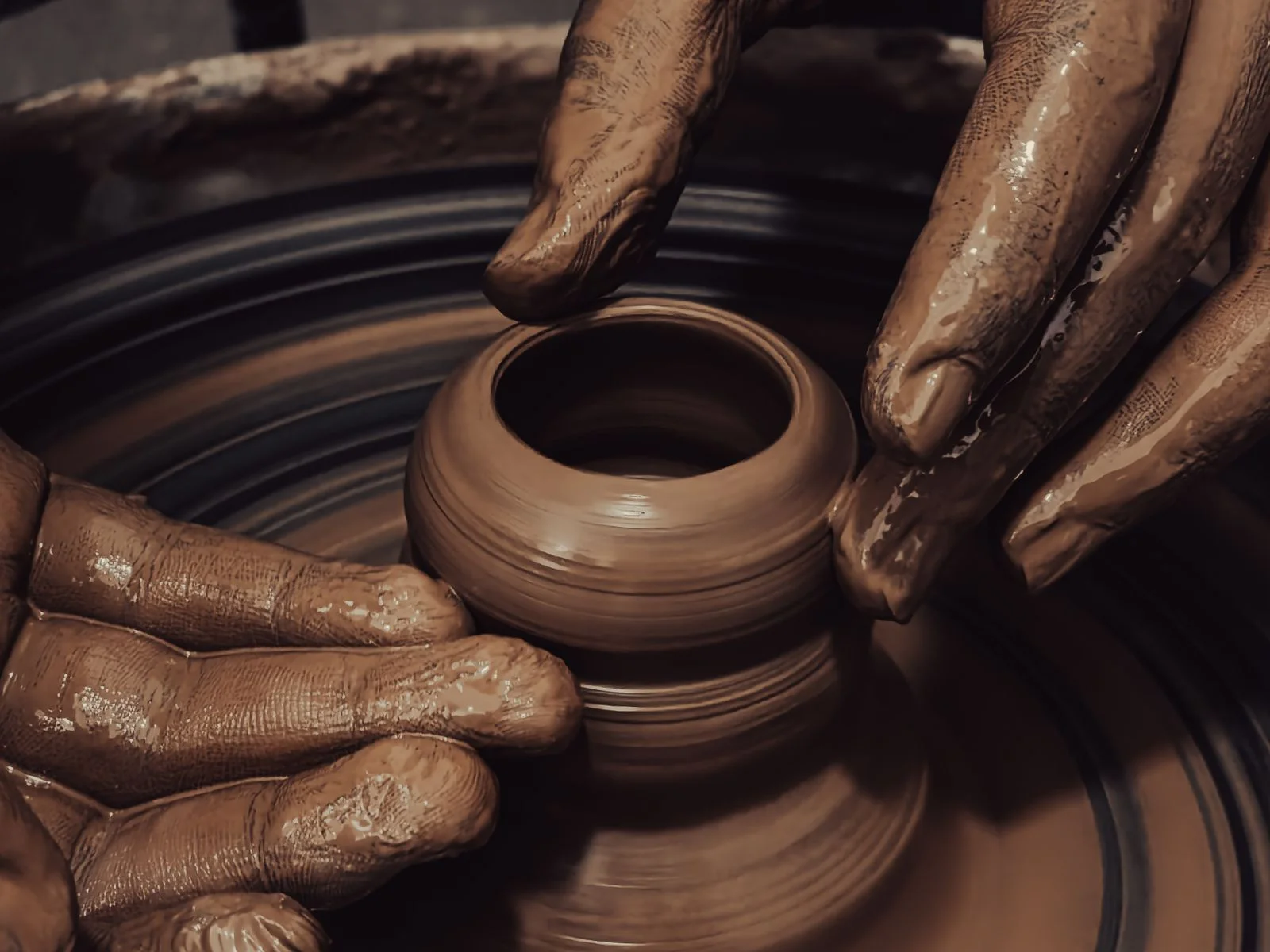
Day 1
Throwing
Centred on the wheel, opened with the thumbs, the walls pulled up in three slow passes. A bowl takes four minutes; learning takes years.
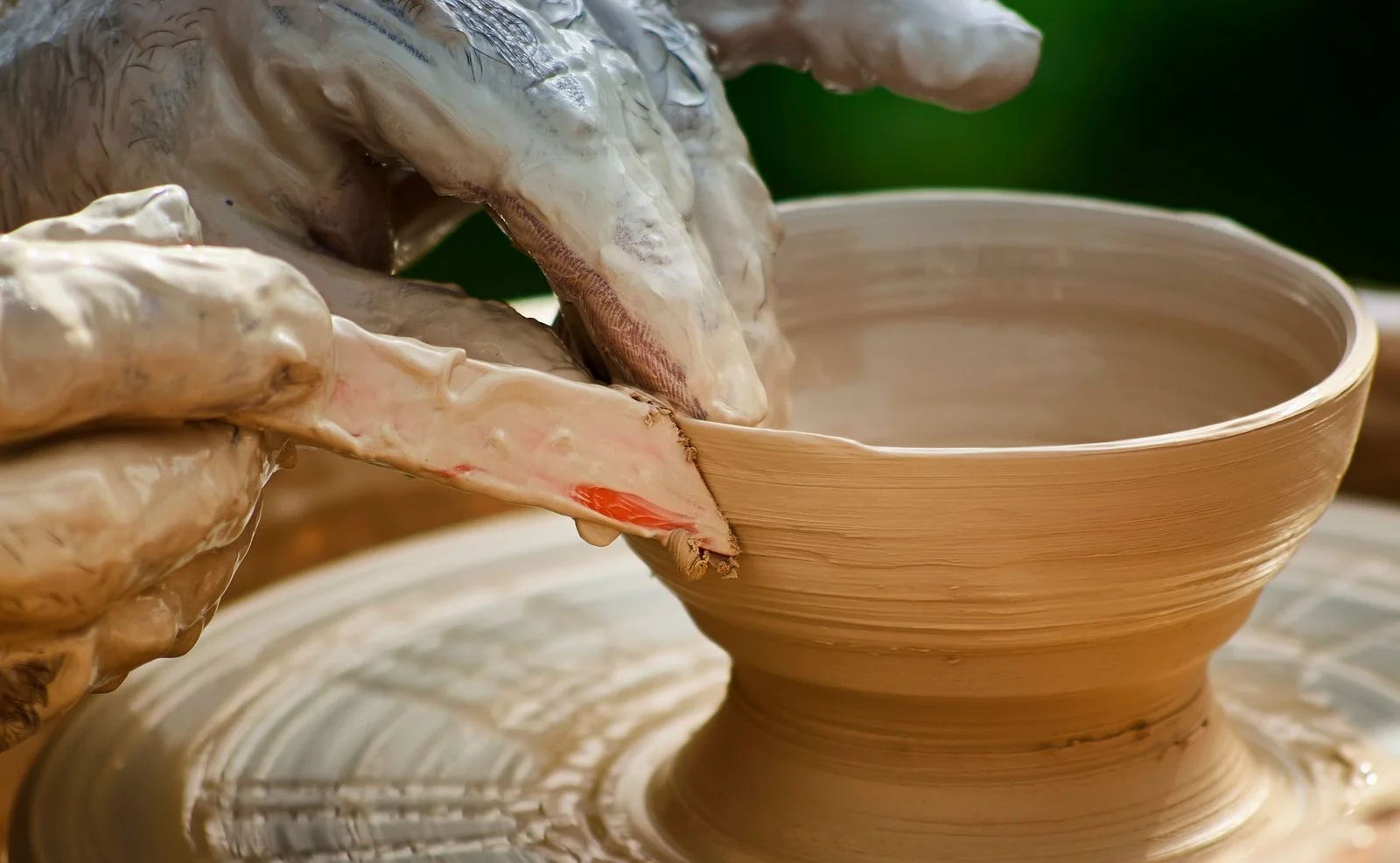
Day 2
Trimming
Leather-hard the next day, the bowl is turned upside down and its foot carved out, so it sits light in the hand.
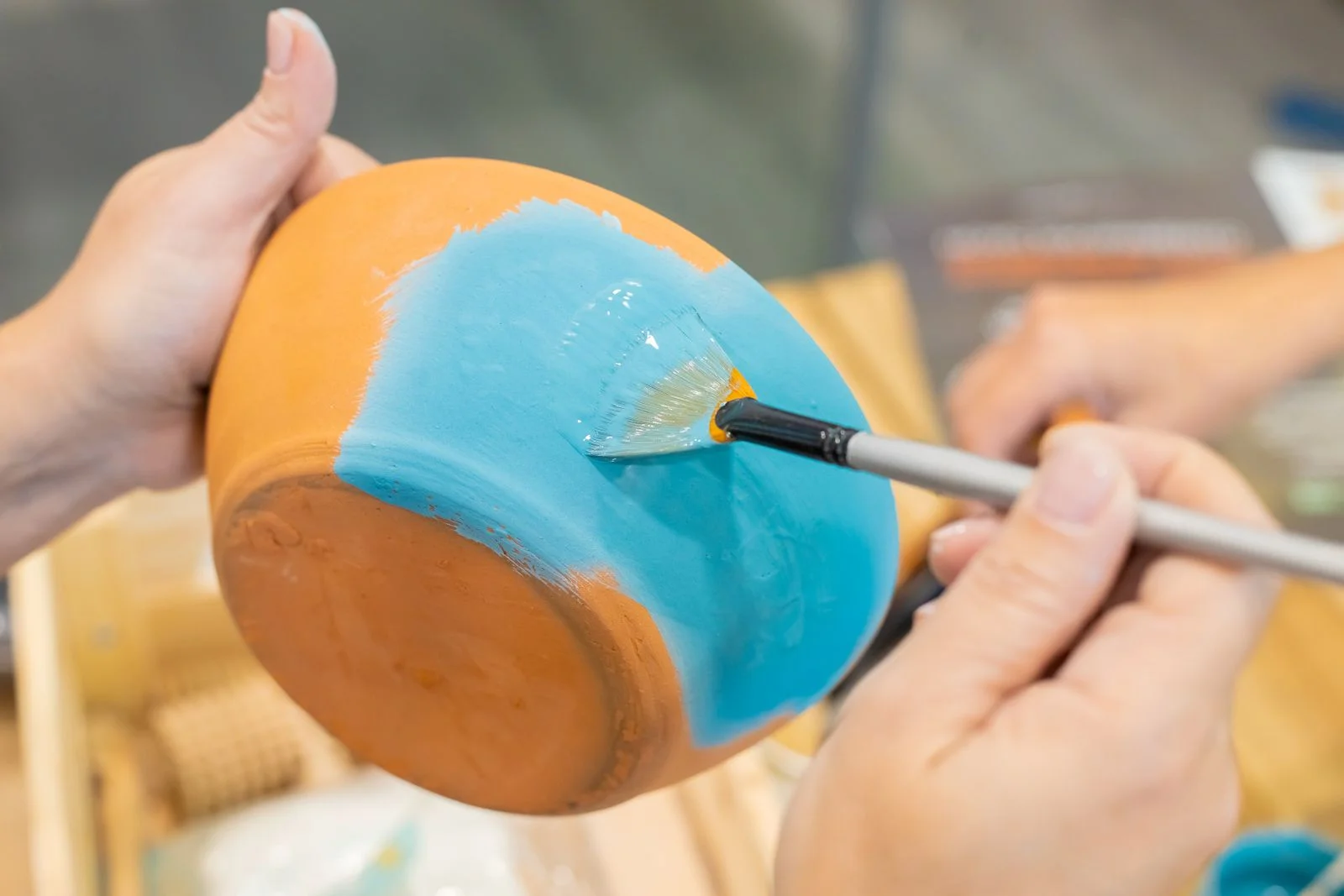
Week 2
Glazing
After a first firing at 950 °C, every piece is dipped or brushed with glazes mixed here from my own recipes.
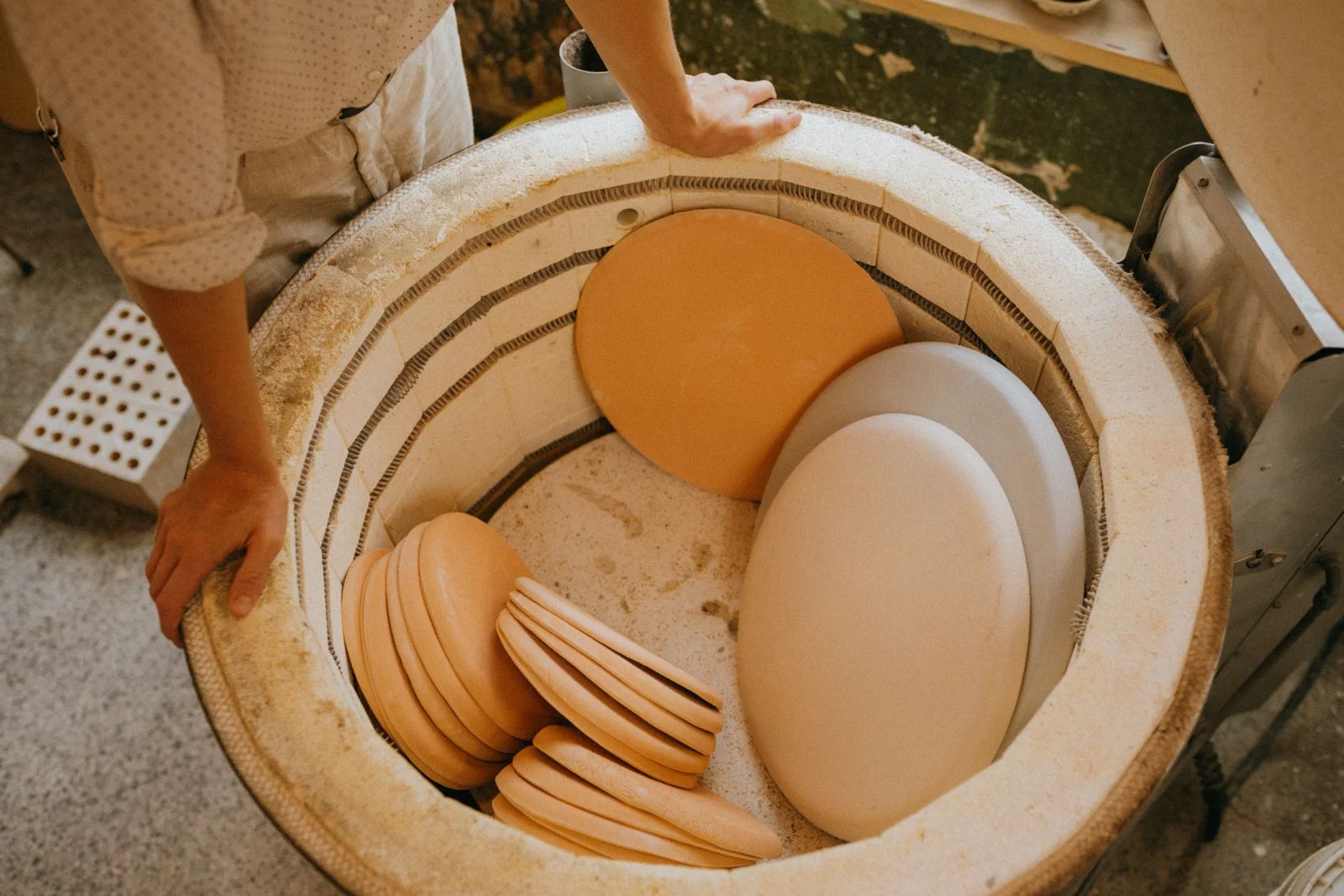
Week 3
Firing
Thirty hours in the kiln up to 1,260 °C, then a day of waiting before the door can be opened. Every firing is a small surprise.
A firing takes thirty hours. Opening the kiln takes one second.
What the studio runs on
A small studio can still choose its materials carefully.
Stoneware clay from the Westerwald
A fine, iron-speckled clay dug three hundred kilometres away, in Germany’s oldest stoneware region.
Glazes mixed by hand
Ash, feldspar and iron oxide, weighed and sieved in the studio: no ready-made glazes.
Nothing thrown away
Trimmings and failed pots are soaked, dried and wedged back into clay.
Green electricity
The kiln runs on certified renewable power from a Leipzig cooperative.
Paper, not plastic
Orders are packed in recycled paper and corrugated card from the bookbinder next door.