Most leather sold today is tanned with chromium salts. It is fast, about a day, cheap and perfectly uniform. It is also the reason most leather goods look their best on the day you buy them.
We work with only one kind: vegetable-tanned leather, from a family tannery in Santa Croce sull'Arno, forty minutes down the river from our workshop.
Forty days in the pits
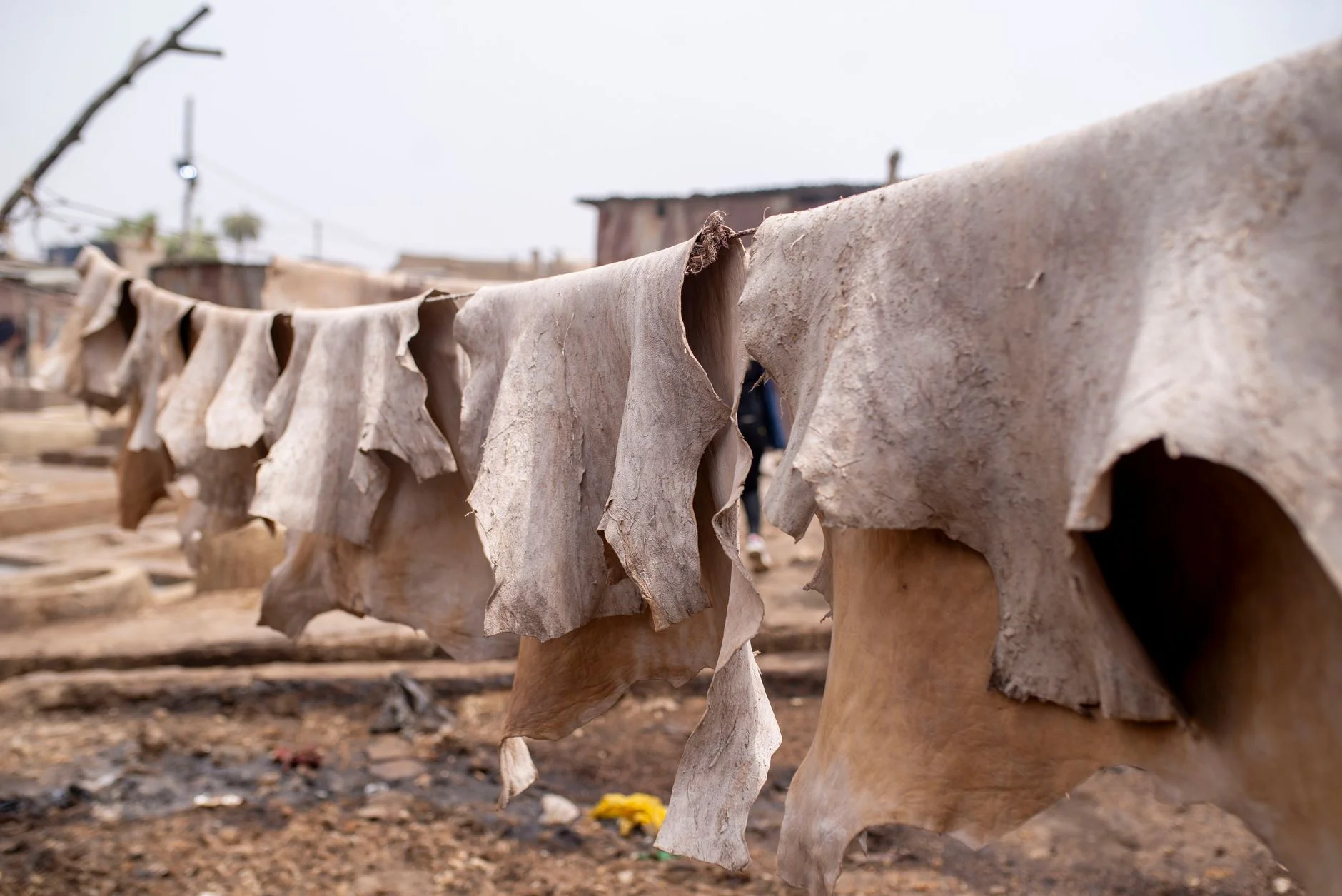
The hides rest for weeks in wooden drums and pits filled with tannins from chestnut, oak and mimosa bark. The tannin works slowly, from the surface towards the core, and the leather that comes out is firm, dense and full of life.
- It ages. Light, touch and the oils of your hands darken it from honey to deep cognac. That patina is the reason people keep these bags for decades.
- It can be repaired. A firm leather holds a new seam and a re-dyed edge as well as on the first day, which is how we can promise repairs for life.
- It smells of leather, not of chemicals.
What it asks of you
Vegetable-tanned leather is less forgiving than chrome leather on the first day. A drop of rain leaves a mark, a scratch shows. Both fade into the patina within weeks, and a little balm twice a year is all the care it needs.
Why it matters to us
We are two people. We cannot make many bags, so each one has to last. Starting with a leather that improves with time is the only way to do that honestly.
Read our leather care guide to keep yours at its best.
Comments
Be the first to leave a message.
Thanks, your message is live.
Thanks, your message is awaiting moderation.