Brewing basics
Weigh your coffee, pick the right ratio and grind, and use water at the right temperature.
Four things decide what ends up in your cup: how much coffee you use, the water, how fine you grind and how long the two spend together. Get them right and every method on this site will work for you.
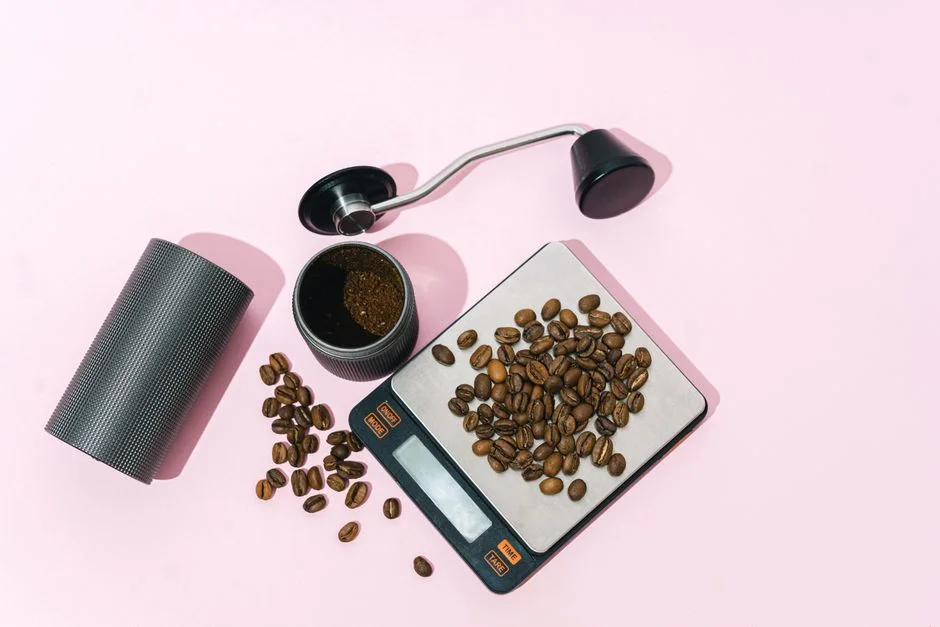
Weigh, don’t scoop
A kitchen scale that reads to the gram is the best brewing tool you can buy for under $20. Scoops lie: a light roast is denser than a dark one, so the same scoop can hold 20% more or less coffee. Every brew card in these guides gives grams, and we brew the same way at the café.
Ratio: the one number to remember
Most methods work between 1:15 and 1:17 — one gram of coffee for 15 to 17 grams of water. Stronger than that tastes heavy, weaker tastes hollow. Cold brew is the exception: it is brewed as a 1:10 concentrate and diluted to taste.
Grind size, from fine to coarse
Grind just before you brew: ground coffee loses most of its aroma within 30 minutes. The shorter the contact time, the finer the grind.
- Medium-fine (like table salt) — moka pot.
- Medium (like coarse sea salt) — pour-over.
- Coarse (like breadcrumbs) — French press.
- Extra-coarse (like cracked pepper) — cold brew.
Ordering from our shop? Choose the grind option that matches your brewer and we grind it fresh on roast day. Whole beans keep best — see our Ethiopia Guji for a coffee that rewards a good grinder.
Water and temperature
Coffee is 98% water, so use water that tastes good: filtered tap water is perfect in Portland. For hot methods, aim for 93–96 °C (200–205 °F): about 30 seconds after the kettle clicks off. Lighter roasts like hotter water; darker roasts are sweeter a few degrees cooler.
Taste, then change one thing
Sour and thin means under-extracted: grind finer or brew a little longer. Bitter and dry means over-extracted: grind coarser or use slightly cooler water. Change one variable at a time so you know what worked.