Giving an instrument its voice back
A crack, a sinking top, a sound gone dull: every job begins with a free diagnosis at the bench.
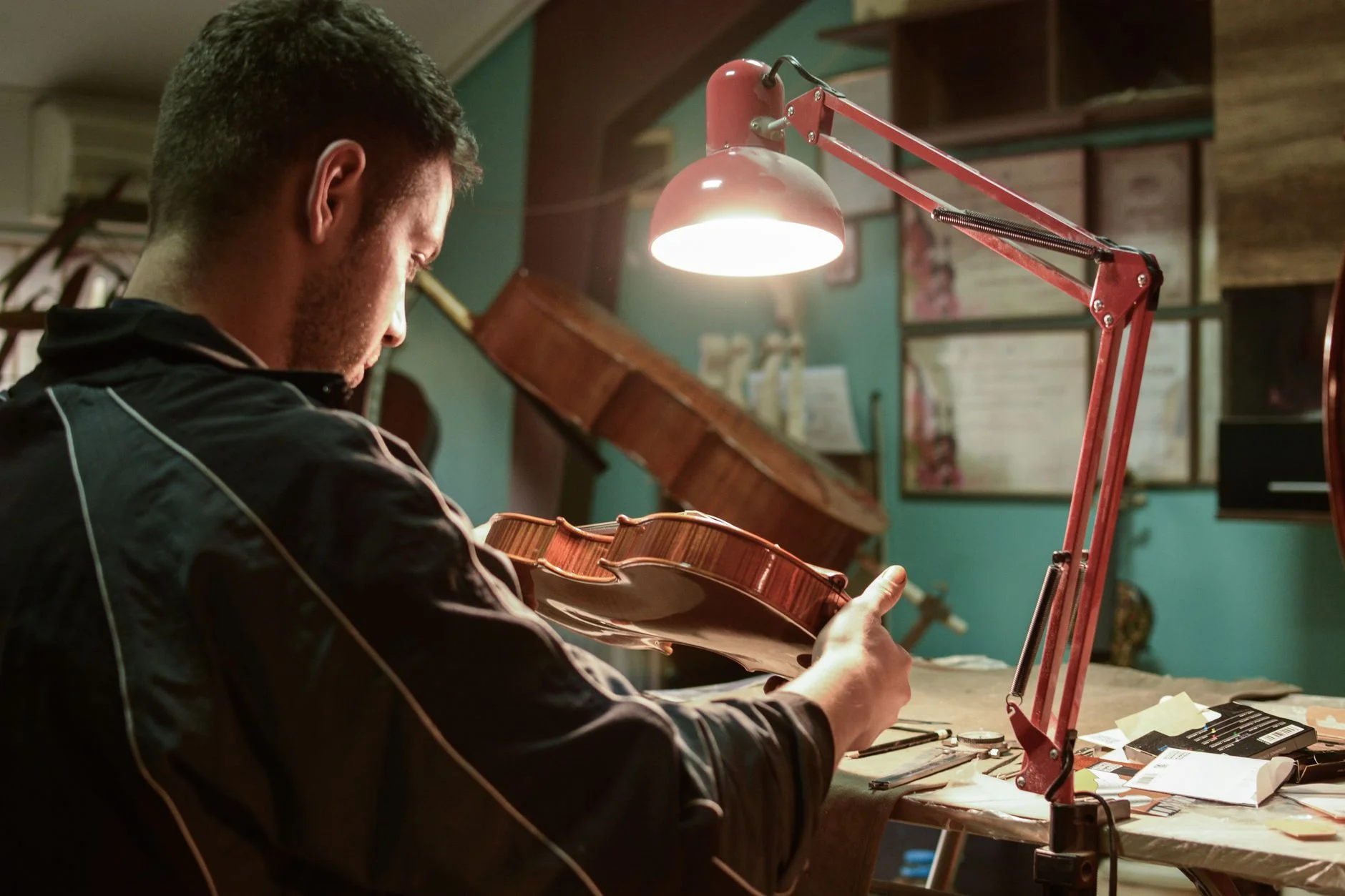
Restoration
Instruments that have lived
Top or back cracks, open seams, broken heads, varnish retouching: I work with reversible glues and old woods, so that every repair can one day be undone by another luthier.
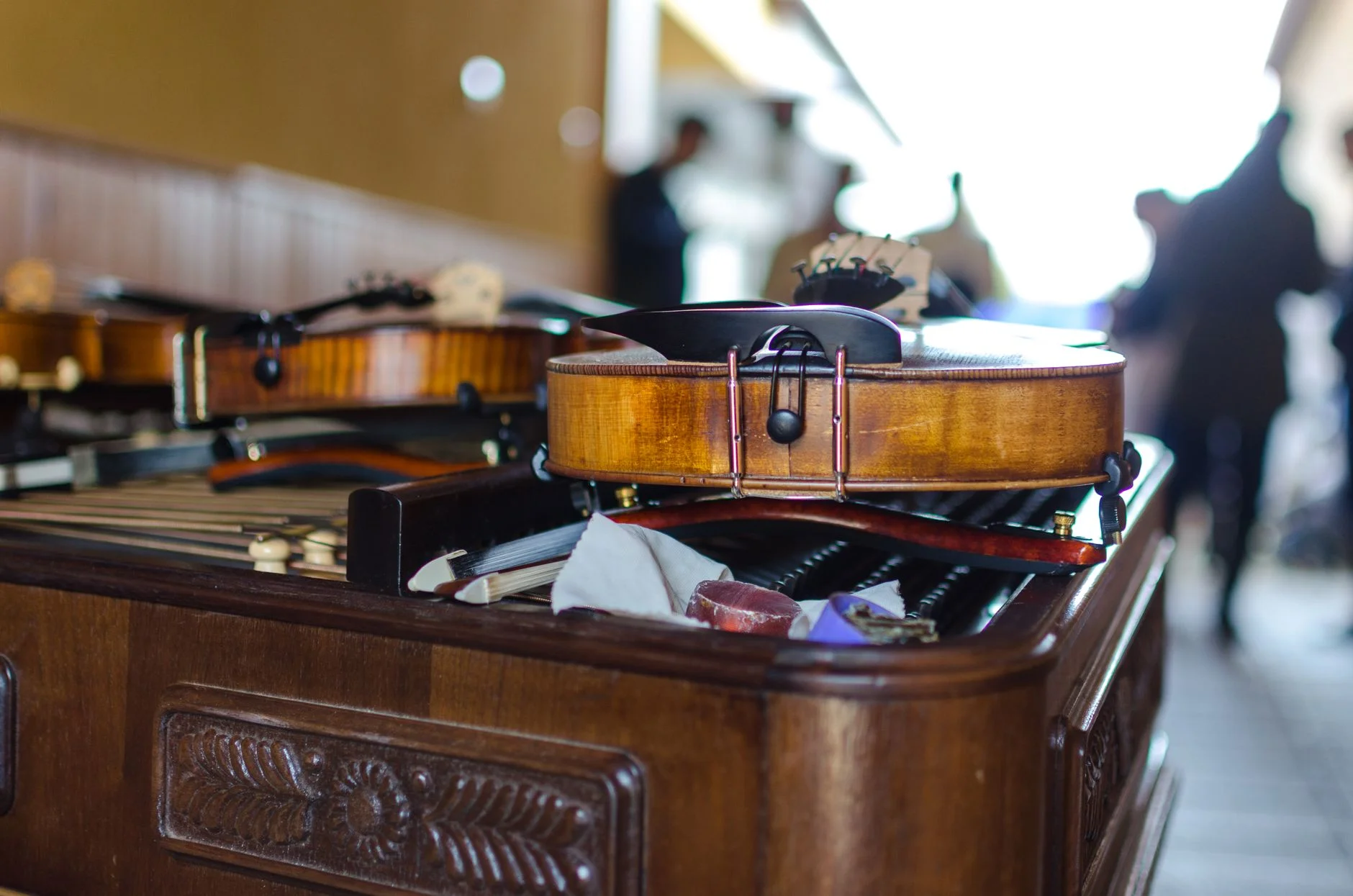
Set-up
Sound is adjusted to the millimetre
Soundpost position, bridge height and curve, string tension: a set-up done with the musician, instrument in hand, often changes more than a new instrument would.

Maintenance
Small care for every season
A fingerboard to replane, slipping pegs, a worn nut, varnish cleaning: one visit to the workshop a year prevents most major repairs.
Indicative prices
What a repair costs
Indicative prices for a violin; allow about 20% more for a viola and double for a cello. A precise quote is always given before starting.
How a restoration works
The diagnosis
You bring the instrument: I look it over, listen to it, and tell you what is urgent and what can wait. Free.
The quote
A written quote, with a realistic timeframe. Nothing is started without your agreement.
The work
From a few hours for a set-up to several weeks for a crack. I send you photos of each stage.
The handover
You play at the workshop, we fine-tune the set-up together, and the instrument leaves with its repair record.